

The Path Forward
Because Hamas thrives on suffering, we must work toward a future where all the hostages return home, the anguish of both Israelis and Gazans ends, and this terrible war is finally over
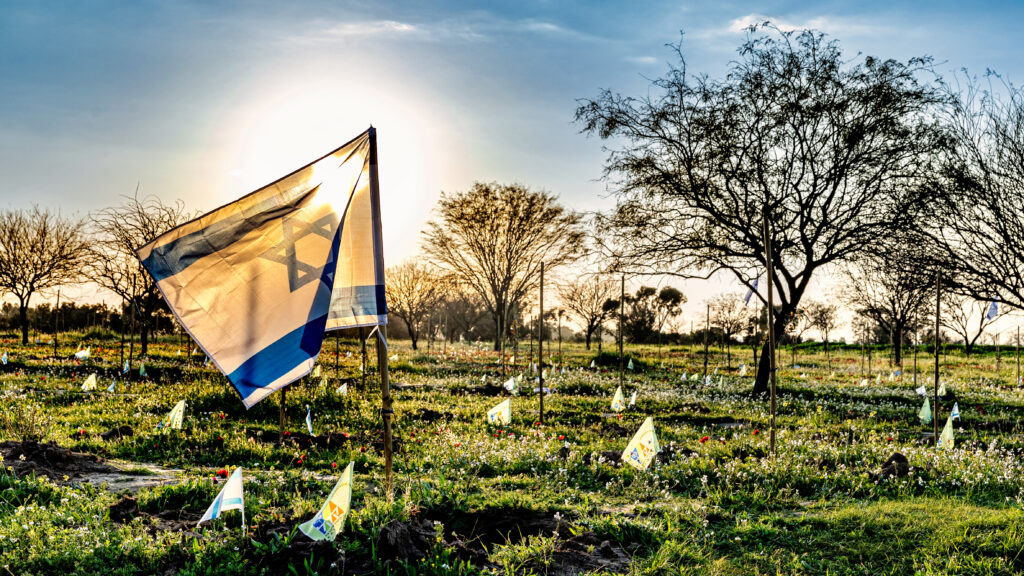
Photo of Nova Music Festival site: Ethan Roberts Photography
July 30, 2025
Nearly two years into the war that began with Hamas’ October 7 massacre and abductions, we share the grief and anguish felt by so many in Israel, in our own community, and in Gaza, where civilians are suffering terribly, 50 Israeli hostages remain in Hamas captivity, and Israeli soldiers and reservists are continuously killed, injured, and traumatized.
As the consensus public affairs voice of our Jewish community, we offer this statement to share how we see this moment—and what we believe is needed to move toward healing, dignity, and safety for Israelis and Palestinians.
Hamas’ strategy is succeeding
Hamas built its war strategy around turning suffering, of Palestinian civilians and Israeli hostages alike, into human spectacle. Its campaign of terror and manipulation includes embedding fighters and tunnels in civilian areas, obstructing and hoarding humanitarian aid, and spreading propaganda designed to provoke outrage, deflect responsibility, and prolong its forever war with Israel.
Hamas’ perverse strategy is driving Gaza’s human catastrophe—and horrifyingly, it is working: Israel is increasingly isolated diplomatically and antisemitism exploded across U.S. and Europe in the wake of October 7.
This war’s unprecedented—and often unreliable—global media coverage also feeds this strategy. From traditional outlets to social media, unverified Hamas claims are routinely published alongside Hamas-approved images. As veteran Israeli journalist Matti Friedman recently assessed, “there are nearly no trustworthy sources regarding reality in Gaza.” He and others point to a shared responsibility for the information vacuum: Hamas’ coercive control, limited Israeli transparency, and the fog of war all contribute.
Hamas’ most powerful weapons are the global outrage generated by images of Palestinian suffering—which it engineered—and the ongoing physical and psychological torture of Israelis. To defeat this strategy of suffering, Israel must prioritize the welfare of Gazan civilians while working to secure the release of all the hostages.
Addressing urgent humanitarian needs
Like the information vacuum, the humanitarian crisis is also a collective problem with shared responsibility. In recent days, Israel has again substantially increased efforts to ease civilian suffering in Gaza to overcome obstacles Hamas and the United Nations have placed in the delivery of aid to Palestinian civilians. These steps by Israel— air-dropped aid, humanitarian corridors, coordinated pauses in combat, and expanded water infrastructure—reflect both a moral imperative rooted in Jewish values and a strategic necessity.
We welcome the continued expansion and coordination of humanitarian operations—including the large-scale delivery of food, medicine, and supplies to Gazan civilians. But Israel cannot and should not bear this responsibility alone. The United Nations, relief agencies, and every other actor involved must do their part to undercut Hamas’ strategy of maximizing human suffering. We appreciate the United Arab Emirates, Jordan, and Egypt’s recent progress in delivering aid to Gazans.
Bring all of them home, now
Nearly three out of four Israelis support an agreement with Hamas that would release all the hostages at once in exchange for an end to the war. This outcome depends on sustained international pressure on Hamas, which becomes harder to achieve when Hamas sees the international community isolating Israel. It may also require Prime Minister Netanyahu to break with his far-right coalition partners on this issue.
While previous ceasefires secured the release of 148 living and 8 dead hostages, more than 80 of those abducted on October 7 were murdered by Hamas, including babies, children, women, and the elderly. The 20 living men, who Hamas is intentionally starving and are being held in unimaginably inhumane conditions, are in grave danger. Additionally, the families of the 30 murdered hostages deserve the return of their loved one’s bodies for proper burial.
Securing the return of all hostages—living and dead—must be Israel’s top priority.
—
As we enter the month of Av — a time that holds both the pain and the potential of the Jewish People — we have chosen this moment to speak, out of love for Israel and concern for all who are suffering. May we work for a future where all hostages return home, the suffering of Israelis and Gazans ends, and this terrible war is finally over.
###